Robert Sylvan Marx
Robert Sylvan Marx’s Personal Narrative was derived from information found in public records, military personnel files, and local/state historical association materials. Please note that the Robb Centre never fully closes the book on our servicemembers; as new information becomes available, narratives will be updated to appropriately represent the life story of each veteran.
Please contact the Robb Centre for further clarification or questions regarding content or materials.
Military Honor(s):
Distinguished Service Cross
Citation: The Distinguished Service Cross is presented to Robert S. Marx, Captain, U.S. Army, for extraordinary heroism in action in front of Baalons, France, November 10, 1918. Having been sent to make a reconnaissance and if found necessary to take command of the 3d Battalion, 357th Infantry, the advance of which had just been checked with severe losses, Captain Marx displayed the highest quality of courage and leadership in the face of a murderous artillery and machine-gun fire by immediately reorganizing the battalion and after a personal reconnaissance directing the assault line, which resulted in the taking of the enemy position. During the attack Captain Marx was severely wounded. His brave example greatly inspired his men.
Medaille Militaire 3R
Life & Service
- Birth: 28 January 1889, Cincinnati, OH, United States
- Place of Residence:
- Race/Ethnicity: Jewish American
- Death: 6 September 1960 Charlevoix, MI, United States
- Branch: Army
- Military Rank: Captain
- Company:
- Infantry Regiment: 357th
- Division: 90th
Robert Sylvan Marx was born to William (1860-1915) and Rose (Loewenstein, 1861-1933) on 28 January 1889 in Cincinnati, Ohio. Though both William’s and Roses’ parents were born and raised in Ohio, their respective families hailed from towns in Germany only 340 miles apart, and immigrated to the United States within years of each other in the 1840s. William and Rose were both raised in steady, middle-class environments in greater Cincinnati. William’s father, Solomon, worked as a shoe cobbler and seller; Rose’s father, Julius, as a wholesale clothing merchant. The couple were bound to meet eventually, as they lived only a few blocks from each other in downtown Cincinnati, William on West 9th St., Rose on East 3rd St., just North of the Ohio River. Married in 1883, the couple lived first at 509 W. 9th Street, but soon moved to 855 Lexington Ave., a neighborhood of modest stone apartments and homes, many of which still stand. Over the next 20 years, the couple hosted several of their aging relatives and in-laws, at one point housing Rose’s mother, Bertha, later her sister, Louise, along the while employing one or two women to keep house. The Marx family lived a relatively comfortable life, William’s relationship with local politicians and leaders allowed him a seat on several organizations, including on the Cincinnati Board of Health in 1906.
By this time, Robert Marx graduated from Walnut Hills High School, and he was prominent among his classmates as a skilled debater and orator, obviously eager to pursue his teenage ambitions of becoming “judge of the Supreme Court.” Marx attended the University of Cincinnati, graduating in 1909 with a rather robust list of accomplishments: varsity football player, debate team member and award-winner, Democratic Club, and The Cincinnatian newspaper editorial board. Marx showed not only athletic and academic talent, but ambition incomparable to his peers. In 1910, he took and passed with ease the Ohio State Bar examination, leading to his employment with Warrington, Paxton, and Seasongood, a prominent law firm with famous clients, operating out of the Cincinnati Citizens Bank building.
The 1910s brought, arguably, some of the most defining moments of Marx’s life starting in 1915. Operating out of his parent’s home and a studio off of 6th and Main streets, Marx opened his personal attorney services to the public. In March that same year, his father died at the age of 55. This period of grief, a serious blow to the family, did not appear to slow Marx down significantly. Not only did he continue his practice, he also attended and graduated from the U.S. Navy’s Volunteer Naval Training Crew in 1916, and in preparation of America’s entry into the World War I, served as chairman of the Enrollment Committee for the Military Training Camp(s) Association of Southern Ohio. Prior to his own enlistment in 1917, Marx served as president of the Jewish Social Settlement Organization, director of the United Social Charities of Cincinnati, trustee of the Helen S. Trounstine Research Foundation (named after a close friend who had died in 1916), and a member of the National Economic League, among other Cincinnati-area organizations.
On 11 May 1917, Marx entered Officer’s Training Camp at Fort Benjamin Harrison in Lawrence, Ind., earning his commission as a second lieutenant. He was sent to Camp Travis, Texas, and Fort Sill, Okla. to serve as an instructor of physical training and trench warfare. In February 1918, then 1st Lt. Marx was assigned to Company L, 357th Infantry Regiment, 90th Division and promoted to captain 1 June. Less than a month later, Marx and his company left New York City, on 20 June 1918 aboard the U.S. Army Transport Ship Harrisburg, arriving in Brest, France, 26 June 1918.
Captain Marx and his company traveled first to the Villars-en-Haye sector 21 August 1918, where they would participate in the St. Mihiel Offensive on 12 September 1918. “In preparing for the attack of September 12th other units were being squeezed into the line and the various units in the line had to side-step in order to allow this. Every precaution had to be taken to disguise the fact that new troops were being brought into the line and that an attack was impending. Owing to this fact the battalions of the regiment could not be moved until almost the time of starting of our artillery preparation at one hour, morning of the 12th. The night was spent in cutting wire, which was done not only in front of the jump-off line for the regiment but in sectors that were eventually to be occupied by other units, from which units it was very important that no prisoners be captured. The battalions were moved under serious difficulties, but everything was in position at H hour”. Marx served as operations officer throughout the Farm Sebastopol Offensive 26 September 1918, and Meuse Argonne Offensive 21 October to 10 November 1918, until he was placed in command of 3rd Battalion, 357th Infantry Regiment, on 10 November 1918.
Marx received the Distinguished Service Cross for his actions on 10 November 1918, “The President of the United States of America, authorized by Act of Congress, July 9, 1918, takes pleasure in presenting the Distinguished Service Cross to Captain (Infantry) Robert S. Marx, United States Army, for extraordinary heroism in action while serving with 357th Infantry Regiment, 90th Division, A.E.F., in front of Baalons, France, 10 November 1918. Having been sent to make a reconnaissance and if found necessary to take command of the 3d Battalion, 357th Infantry, the advance of which had just been checked with severe losses, Captain Marx displayed the highest quality of courage and leadership in the face of a murderous artillery and machine-gun fire by immediately reorganizing the battalion and after a personal reconnaissance directing the assault line, which resulted in the taking of the enemy position. During the attack Captain Marx was severely wounded. His brave example greatly inspired his men.”
Marx, accidentally claimed as dead, recuperated in good time, and with a group of other “walking patients” left Brest, France on 8 February 1919, aboard the U.S. Army Transport Ship Rotterdam, arriving in Hoboken, N.J., on 17 February.
After an honorable discharge in April, Marx did not hesitate to rejoin Cincinnati society, His law practice once again ran full steam ahead, and by fall of 1919, he successfully won a judgeship with the Superior Court of Ohio, known then as a fairly liberal Democrat. It was within this same year that Marx and several friends, whilst convening for the holidays in December, sparked conversations about the potential of a group dedicated to the support of veterans who needed continued support after becoming wounded or ill during their service. This idea soon became the Disabled American Veterans Association, officially founded on 25 September 1920, a social welfare organization tasked with offering logistical assistance to servicemembers receiving veterans’ benefits intended originally for veterans of the Great War, but quickly expanded with the outbreak of World War II. With Marx serving as the DAV’s first national commander, his legacy was secured in this organization which remains strong in its 101 years of service to each generation of servicemembers.
Just before taking his seat on the Ohio Superior Court, Marx was encouraged to join James Cox and Franklin Roosevelt on their 1920 campaign for the U.S. presidency. Though Cox would later lose to Warren Harding, the tour was a very public opportunity for Marx to make new acquaintances for his own personal ambitions.
After his term of service expired in 1925, Marx found himself back in private practice, this time with Nichols, Morrill, Wood and Ginter, corporate lawyers who saw some of the nation’s largest transactions. Leading into the Great Depression of 1929 and the Detroit Banking Crisis of 1933, Marx was at the helm of the greatest cases of the century. It was in this position that he began discussion among colleagues of no-fault automobile insurance (other times known as personal injury protection coverage), a concept in which individuals involved in an accident (with particular level of injury or suffering) could receive monetary relief from a collection of funds not distributed by first-party private insurance, regardless of the involved parties’ potential negligence. The apparent eagerness for variety in expertise only bolstered Marx’s reputation gaining him expertise in stock assessment, bank failures, divorce/alimony and personal injury. There seemed nothing that the “Judge” could not do.
More prominent than his record, however, was apparently his (at times) vivacious and aggressive courtroom personality. A personal account written about Marx by Charles Westheimer in 1974 is perhaps one of the most captivating, if not entertaining narratives consulted on this (in Robert L. Levi’s words,) “titan’ of a man, “The Adjectives used by people who knew Robert Marx are interesting for their insight and also reflect a certain removed puzzle about him as a man. Independent. Lonely. Combative. Aggressive. Moody. Eminent. A very close friend characterized his personality as ‘spicy’…Again: loyal, honorable, sincere.”
In July of 1933, then-72-year-old Rose Marx passed away, the last of Marx’s family; he had lost his longtime confidant, hostess and most ardent supporter. The following years, Marx formed his own firm of Marx, Levi, Thill, Wiseman and Rollins, whose prominence and professionalism would attract the attention of clients of corporate and personal wealth with some of the more demanding affairs of the time. Marx himself saw the inside of the U.S. Supreme Court numerous times, making him an ideal choice to educate some of the nation’s brightest minds at the University of Cincinnati, where for a period of several years in the 1950s, he taught a course dedicated to training law students with aspirations of becoming trial lawyers.
The notion of retirement was obviously not inspiring to Marx, who, despite a long standing staunch physical fitness routine and no regular consumer of alcohol or tobacco, had suffered one or two heart attacks in his 50s and 60s. He had, by all accounts, lived a full and exciting life up until the end, where on his estate in Charlevoix, Mich., he died of a heart attack in bed, 6 September 1960, at the age of 71 years. He was buried with his parents at Walnut Hills Jewish Cemetery in Cincinnati.
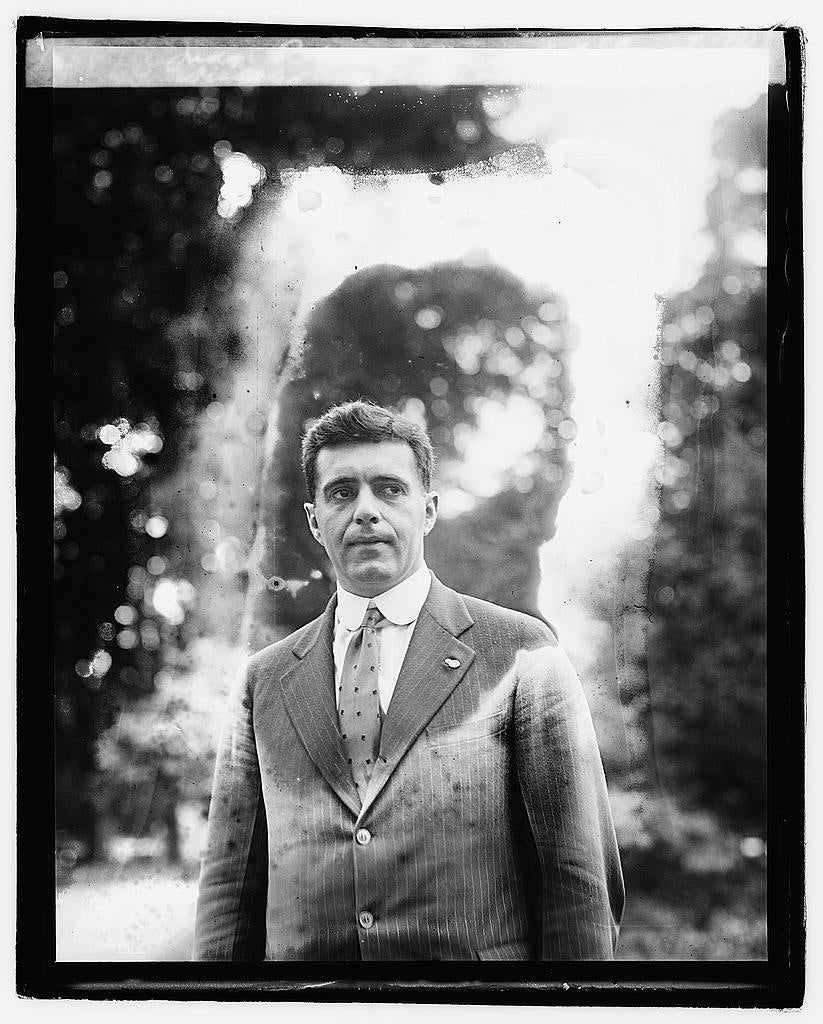
Cincinnati History Library and Archives Collection
Check out Robert S. Marx’s Personal Papers at the Cincinnati History Library and Archives.
The set is located at: Cincinnati History Library and Archives
1301 Western Avenue
Suite 2133
Cincinnati, OH 45203