Samuel Glucksman
Samuel Glucksman’s Personal Narrative was derived from information found in public records, military personnel files, and local/state historical association materials. Please note that the Robb Centre never fully closes the book on our servicemembers; as new information becomes available, narratives will be updated to appropriately represent the life story of each veteran.
Please contact the Robb Centre for further clarification or questions regarding content or materials.
Military Honor(s):
Distinguished Service Cross
Citation: The President of the United States of America, authorized by Act of Congress, July 9, 1918, takes pleasure in presenting the Distinguished Service Cross to Private Samuel Glucksman (MCSN: 85903), United States Marine Corps, for extraordinary heroism while serving with the Seventy-Eighth Company, Sixth Regiment (Marines), 2d Division, A.E.F., in action at Blanc Mont, France, 3 October 1918. After capturing a prisoner, Private Glucksman forced his captive to lead him to a dug-out containing twenty of the enemy, whom he also captured. Later, after being wounded, he returned to the front line, after securing first-aid treatment, and continued in action until his wound forced him to be evacuated.
Navy Cross
Citation: The President of the United States of America takes pleasure in presenting the Navy Cross to Private Samuel Glucksman (MCSN: 85903), United States Marine Corps, for extraordinary heroism while serving with the 78th Company, 6th Regiment (Marines), 2d Division, A.E.F. in action at Blanc Mont, France, 3 October 1918. After capturing a prisoner, Private Glucksman forced his captive to lead him to a dug-out containing twenty of the enemy, whom he also captured. Later, after being wounded, he returned to the front line, after securing first-aid treatment, and continued in action until his wound forced him to be evacuated.
Silver Star Medal
Citation: By direction of the President, under the provisions of the act of Congress approved July 9, 1918 (Bul. No. 43, W.D., 1918), Private Samuel Glucksman (MCSN: 85903), United States Marine Corps, is cited by the Commanding General, SECOND Division, American Expeditionary Forces, for gallantry in action and a silver star may be placed upon the ribbon of the Victory Medals awarded him. Private Glucksman distinguished himself while serving with the 78th Company, Sixth Regiment (Marines), 2d Division, American Expeditionary Forces at Blanc Mont, France, 1 - 10 October 1918.
Croix de Guerre with Silver Gilt Star
Purple Heart
Life & Service
- Birth: 3 June 1887, Lviv (Austria), Ukraine
- Place of Residence:
- Race/Ethnicity: Jewish American
- Death: 14 June 1947 St. Petersburg, FL, United States
- Branch: Marine Corps
- Military Rank: Private
- Company: 78th [E]
- Infantry Regiment: 6th Marine
- Division: 2nd (Army)
Samuel Glucksman was born to Sol (?-?) and an unknown mother on 23 June 1887 in Lviv, L’vivsk’ka, Ukraine, (then known as Lemburg, Austria; 1773-1918, ruled by Austria under Poland. Lemburg was briefly capital of the Kingdom of Galacia). Glucksman emigrated to Montreal, Canada in April of 1905, and soon made his way into New York via New York City Railroad to gain his American citizenship. Glucksman settled, briefly, in Seattle, Washington, where he attended school at a vocational Catholic institution until the mid-1910s.
Samuel moved to Chicago, Illinois between 1911-1917; on 15 December 1911, Glucksman enlisted in the U.S. Army, and served with the Coast Artillery Corps until 14 December 1914. On 3 May 1917 he enlisted in the U.S. Marine Corps.
Private Samuel Glucksman served in the 78th [E] Company, 2nd Battalion, 6th Marine Regiment, 4th Marine Brigade; was assigned to the American 2nd “Indianhead” Division (U.S. Army) during the time of his act of valor on 3 October 1918. The following is his story:
Blanc Mont – 3 October 1918
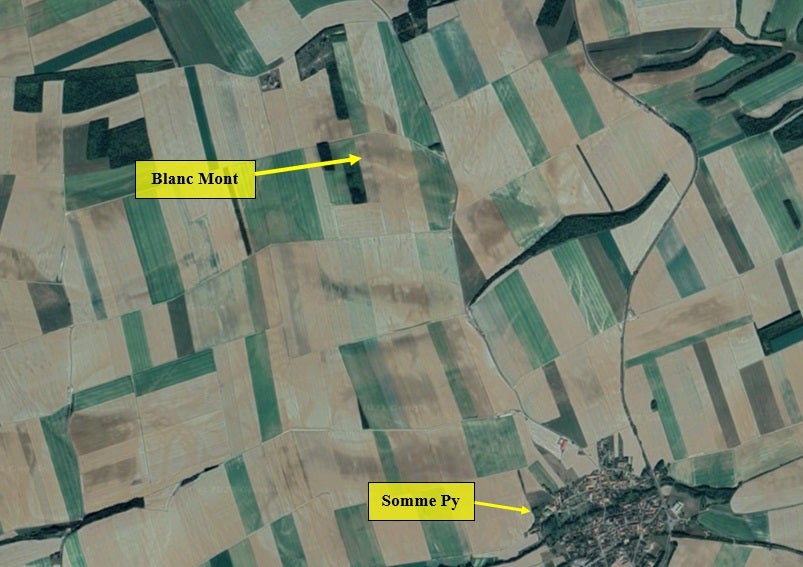
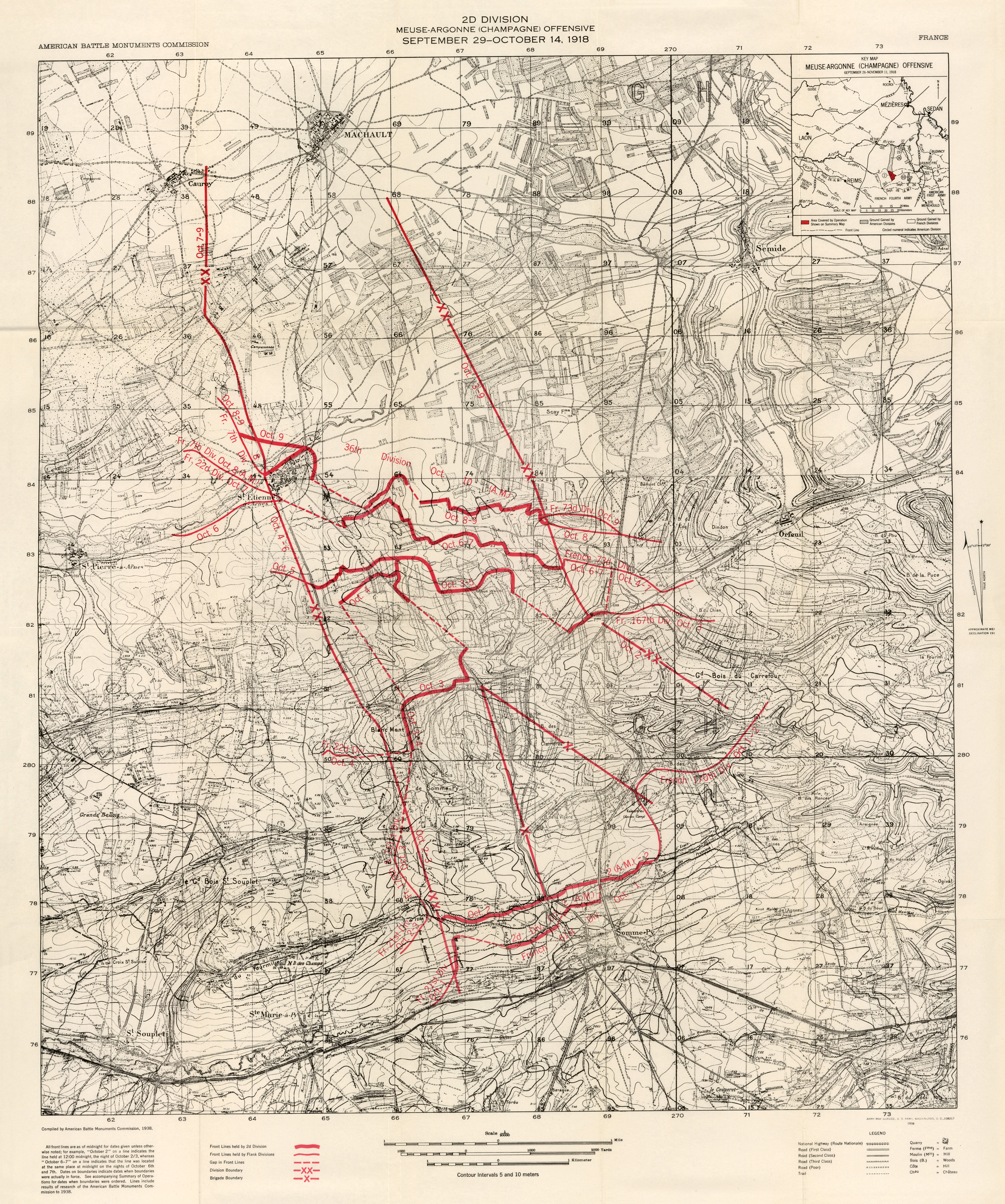
To understand the adversity that Private Glucksman faced during his act of valor, it is important to understand the prelude of the date of his act and how Private Glucksman’s actions are both heroic and selfless.
The Battle of Blanc Mont is known as one of the bloodiest battles the American forces had engaged in during the Great War, and the 4th Marine Brigade would bear the worst of it given they had to ascend the Blanc Mont Massif, which laid directly in front of them. During the battle, the 4th Marine Brigade was attached to the United States Army’s 2nd “Indianhead” Division, which was under command of the French Fourth Army at the time. Subsequently, the 4th Marine Brigade was selected to lead the uphill assault against the German line, with the 5th Marine Brigade following closely in support.
1 October 1918:
During the early morning of 1 October 1918, the American 2nd Division, of which the 4th Marine Brigade was attached, became an official element of the French XXI Corps, French Fourth Army. The 2nd Division was ordered to relieved the French 61st Division, French XXI Corps and a battalion of the French 21st Division, French XI Corps. The 2nd Division began its relief of the French element just north of Somme Py. At 2130 hours (9:30 P.M.), the French XXI Corps issued orders for the 2nd Division to attack Blanc Mont and detailed the 2nd Division to be the left element of the French XXI Corps assault line.
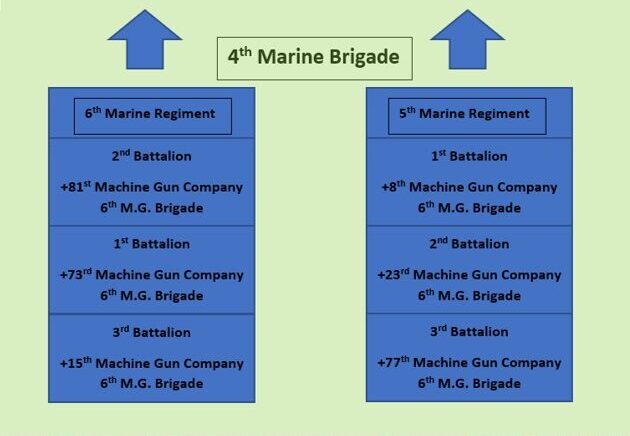
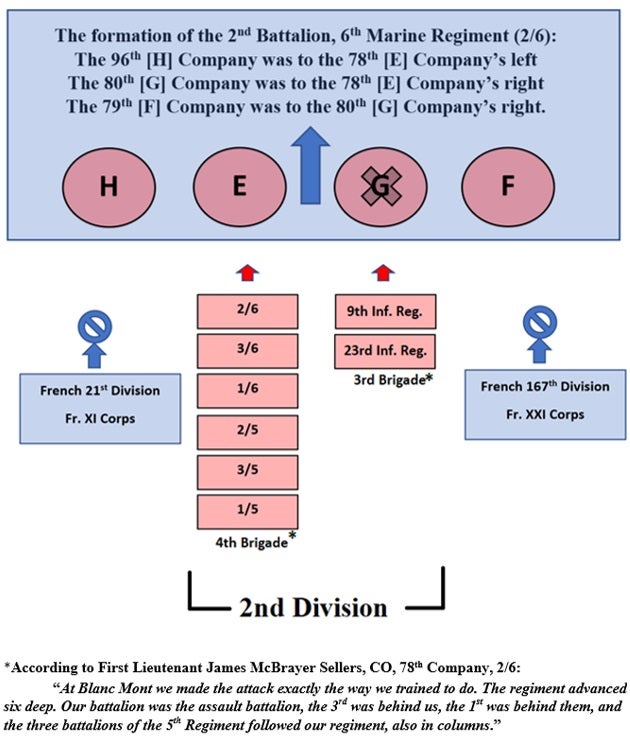
The order of battle planned for the assault of the 4th Marine Brigade. Private Glucksman was apart of the assault battalion (2nd Battalion) of the 6th Marine Regiment located on the left.
The objective of the 2nd Division was to seize and consolidate the line and push German outpost elements down the slop toward the northwest. In preparation for their assault, the 2nd Division took up assigned positions in trenches that spanned about 2 miles long. The 3rd Marine Brigade occupied about one mile of trenches on the right flank; the 4th Marine Brigade occupied about one miles of trenches along the left flank. The 6th Machine-Gun Battalion of the 4th Marine Brigade was assigned as the supporting element behind both Marine Brigades. Liaison with the French on either flank of the Marines was expected to be kept, regardless of the intensity of battle.
General of the Cavalry Krug von Nidda studying a map with the officer of his staff. 22 March 1918.
Opposite of the Allied trenches, the Germans were located in a series of trenches known as the Pacha, Elbe, and Essen trenches, with another set of trenches located on the Blanc Mont Massif, giving the Germans the high ground and view over the Allied lines. General of Cavalry Krug von Nidda, commander of the German XII Corps, noted that an untold number of reinforcements and tanks were being observed opposite of their line, crossing the Py Brook, in the area of Sommepy. Given his observations, General Krug von Nidda anticipated an attack to commence the next day (2 October 1918) and warned his troops to be ready.
The German XII Corps ordered to disrupt the movements of the Allied lines, as the thought of an attack grew in their minds. The German command wanted to allow the greatest chance of successfully counterattacking the Allies through imposing as many casualties as possible and creating disorientation. The German XII Corps ordered the 200th Infantry Division to defend the second main line of resistance, just north of Somme Py, and directed the 51st Reserve Division to defend the third main line of resistance along Blanc Mont Ridge. The German defenses had setup outpost zones that were lightly defended which machine-guns and artillery. The German artillery began concentrating fire on the Allied lines from concrete bunkers, in doing so they kept their position unexposed to Allied observers.
The German 235th Infantry Regiments along with elements of the 234th Infantry Regiment created an outpost zone approximately 4.6 kilometers wide and 2.7 kilometers in depth. Meanwhile the German 74th Reserve Infantry Regiment dug their heels into Blanc Mont Ridge to prepare for a counterattack along what would later become the 4th Marine Brigade’s flank. At 2040 hours (8:40 P.M.), German Group Py issued orders to the 200th Infantry Division, 15th Bavarian Division, and 3rd Guard Infantry Division to maintain their positions and for the 7th Infantry Division to withdrawal to a German strong point at the east slope of Helenen Hill. The Germans were prepared for an Allied attack, and having setup kill zones and fortified positions, that even the bravest of men would be stricken with panic and frozen by fear.
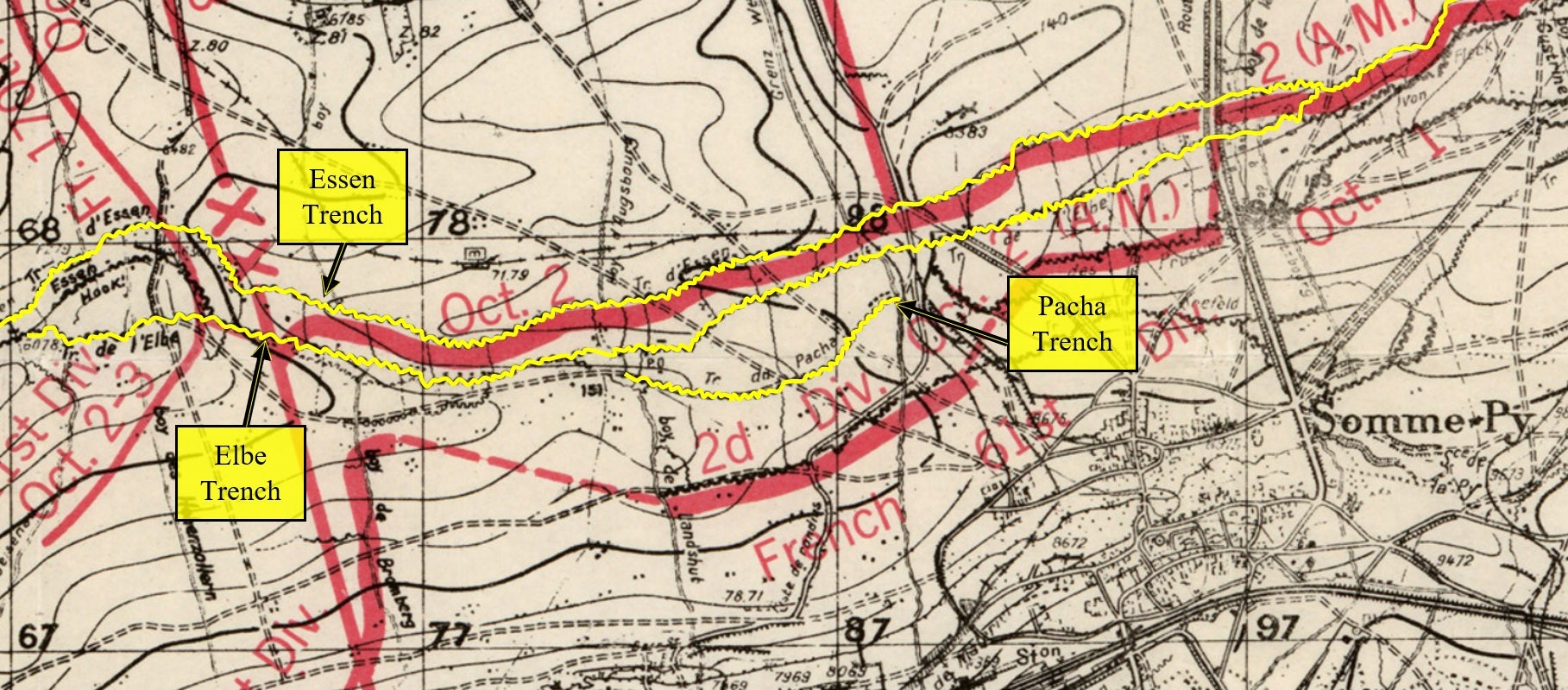
German trenchline night of 1 October/early morning of 2 October 1918. To the left of the map, between the Essen and Elbe Trenches, the “Essen Hook” can be seen. The “Essen Hook” referred to the bend in the Essen Trench that held a strongly fortified hill by the Germans that could command the ground between the 2nd Battalion of the 4th Marine Brigade and the two trench lines. The “Essen Hook” contained numerous and highly fortified machine-gun nests that the French were unable to break given its high position and view over the sector.
Although during the early afternoon, Operation Memo No. 9 was sent out to the American 2nd Division ordering the 4th Marine Brigade to advance to prepared positions along the Allied line during the night and be ready to attack in the morning of 2 October 1918. The orders were not received until nearly the next day. During the night after an artillery preparation commenced in front of the 2nd Division line, soldiers of the French 21st Division, located to the left of the 2nd Division, began to advance at 2350 hours (11:50 P.M.). Confusion and chaos ensued in the 2nd Division’s lines and its command was unsure if they were to participate in the assault or hold position and await further orders. Luckily, just as the French were leaving their positions, Operation Memo No. 9 was received by the 2nd Division. The 2nd Division held its position for the night without making any costly advance by mistake.
2 October 1918:
As the French attacked, they began to take heavy losses. The French command felt it necessary to bring American forces into the attack against the heavily fortified positions in and around Blanc Mont, and the 2nd Division was ordered to take over the frontline of the unsuccessful and severely battered French units near Somme Py. At 0200 hours (2:00 A.M.), 2nd Battalion of the 6th Marine Regiment, of which the 4th Marine Brigade were in, began relieving the French 61st Division in the sector north of Somme Py, where it marched 12 kilometers from the road from Suippes.
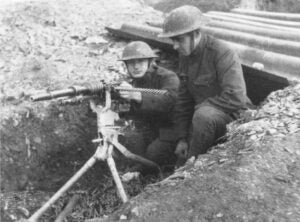
Americans with an M1914 Hotchkiss
By 0500 hours (5:00 A.M.), all four companies of the 2nd Battalion, 6th Marine Regiment took position in conjunction to Operation Memo No. 9. The companies formed a line with the 81st Machine-Gun Company (carrying 12 French-made Hotchkiss M1914 Machine-Guns) in the far left, the 78th [E] Company in the left-center, 80th [G] Company in the right-center, and the 79th [F] Company as the far right element. The 2nd Battalion was located in the former German Krefeld Trench, located just north of the ruins of Somme Py, and its left flank was to be protect by the 96th [H] Company occupying the Boyou de Bromberg (communication trench).
At 0800 hours (8:00 A.M.), the 2nd Division took command of their front, and the 4th Marines saw the horrors of the battle-scarred chalky white soil they would need to cross . The terrain was mostly flat with farrow fields overgrown with wild grass and destroyed towns in the distance, but pockets of long-slopping hills and ridges manifested between the open fields of fire that made picking of an attacker easy for the fortified German defenses. The ground was littered with dead soldiers, scattered material, and dead horses; the smell was unspeakable from the odor of the rotting corpses. In the distance, Blanc Mont ridge stood above a small pocket of forest, peering over the young trees like a giant eagerly awaiting its next victims.
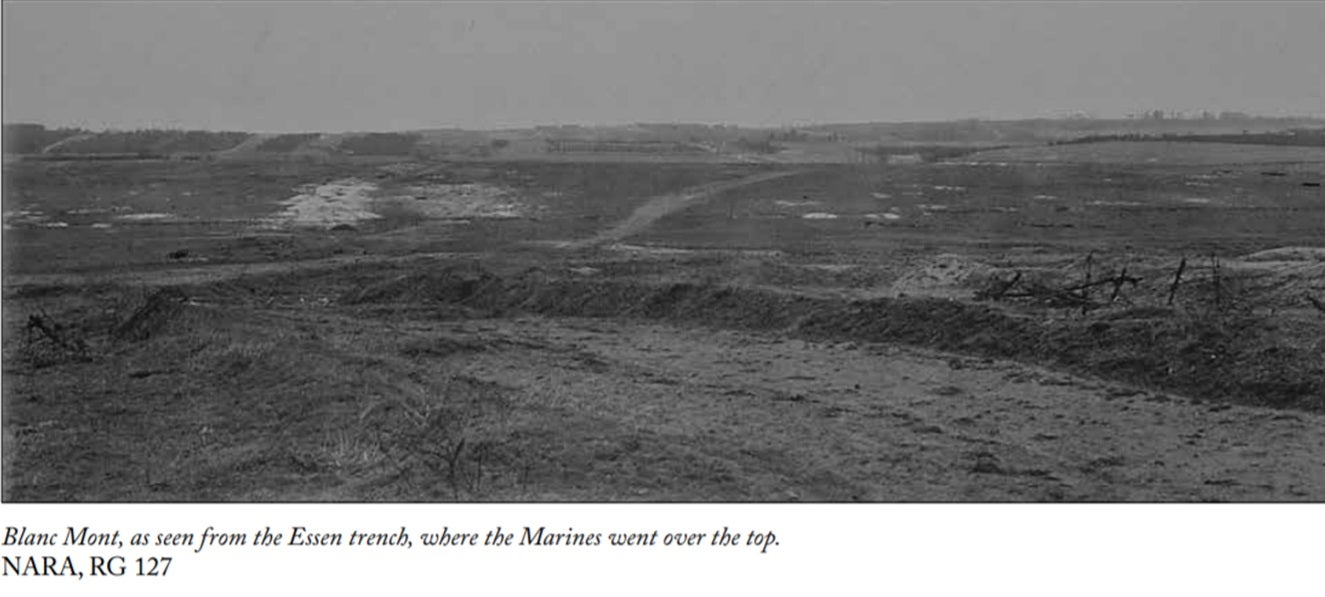
As the 4th Marine Regiment moved into place, a conference was held at the French XXI Corps headquarters to discuss a plan of attack for the 2nd Division. At 0945 hours (9:45 A.M.), the 4th Marine Brigade was ordered to attack in a column of battalions which would be made of columns of regiments. The columns would consist of one regiment as the assault element, one regiment as support, and a regiment to serve as reserve. The orders reached the 6th Marine Regiment, and the 2nd Battalion had been chosen to be the assault battalion, Private Glucksman’s 78th [E] Company was chosen to be the assault regiment.
To be prepared for the attack and reach the designated jump-off point, around 1000 hours (10:00 A.M.), the 80th [G] Company of the 6th Marine Regiment was ordered to move up the communication trenches to see if the trenches ahead of them were clear of Germans. Colonel Harry Lee, commander of the 6th Marine Regiment, reported that the 80th [G] Company found that the Elbe and Essen trenches were unoccupied. At 1130 hours (11:30 A.M.), the 2nd Battalion ordered First Lieutenant McB. Sellers to send a patrol from the 78th [E] Company into the Elbe and Essen trenches and they confirmed that the trenches were clear of all German troops, however, the Germans still controlled strongpoints to the west.
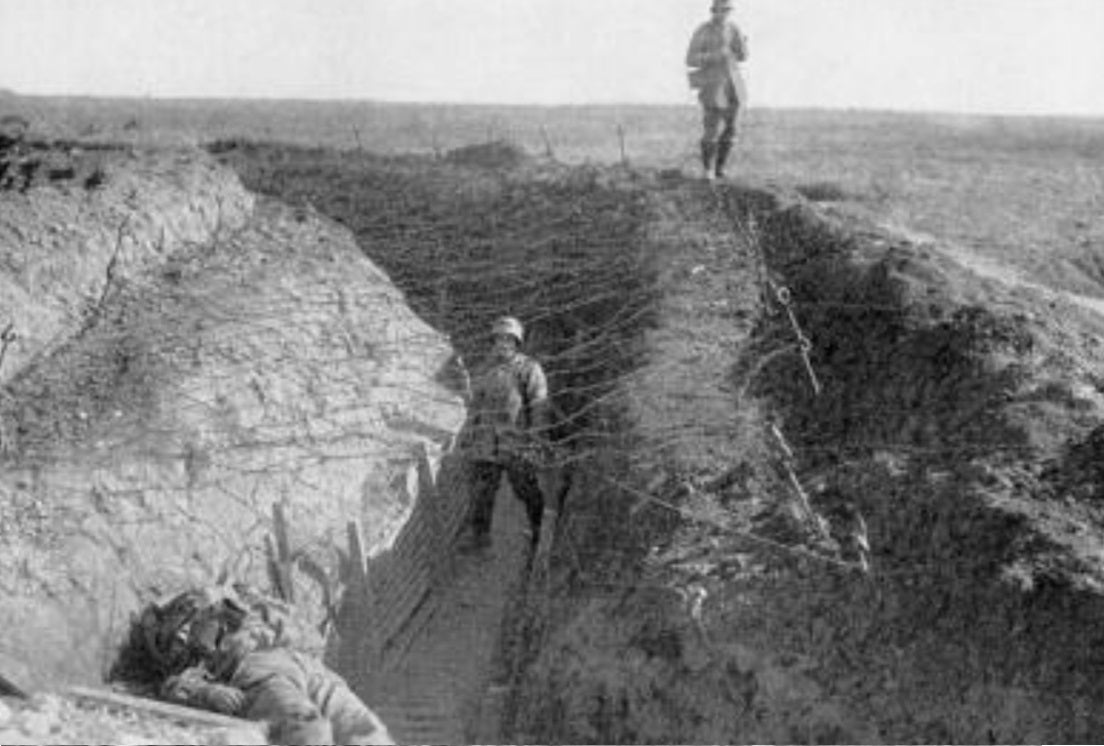
“Atop Blanc Mont, German forces commanding the surround Champagne [Sector]” – Photo courtesy of Doughboy Center, worldwar.com/dbc/bm1.htm
At 1620 hours (4:20 P.M.), Major Williams, issued ordered for his battalion to occupy the Pache, Elbe, and Essen trenches via infiltration at 1630 hours (4:30 P.M.). Two platoons were to be used, followed by two more platoons as the trenches were reached, the 2nd Battalion was to then consolidate itself and hold until further notice. At 1820 hours (6:20 A.M.), the 4th Marine Brigade issued specified orders of where heavy weapons should be placed for the assault and ten-minutes later, at 1830 hours (6:30 P.M.), the 78th [E], 79th [F], and 80th [G] Companies had reached the trenches without encountering German opposition.
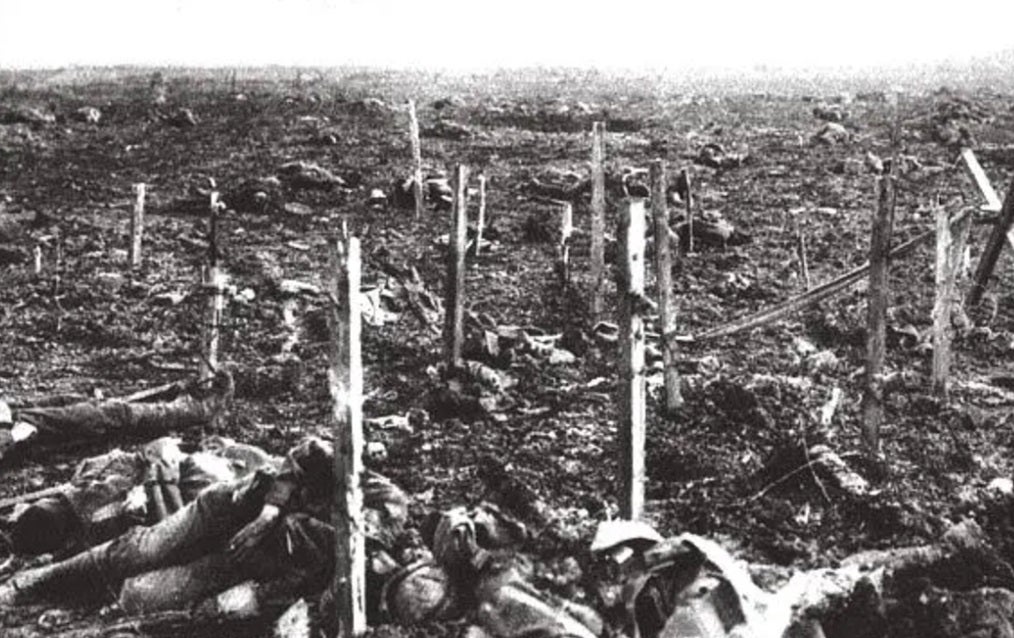
Dead soldiers lay in no-man’s-land -Circa 1914
Despite the 2nd Division receiving 16 casualties due to Germans covertly scaling down Blanc Mont and throwing hand grenades into the lines, the remainder of the day was relatively quiet for the Marines. Don Paradis of the 80th [F] Company, 6th Marine Regiment, wrote “We spent another quiet day… Even had hot chow brought in to us after dark… There was quite an odor of dead bodies blowing across No-Man’s-Land but I don’t remember that it affected anyone’s appetite.” At 2000 hours (8:00 P.M.), Lieutenant Clifton B. Cates, commander of the 96th [H] Company, reported that liaison with the French to the left, and the 78th [E] Company to the right was established.
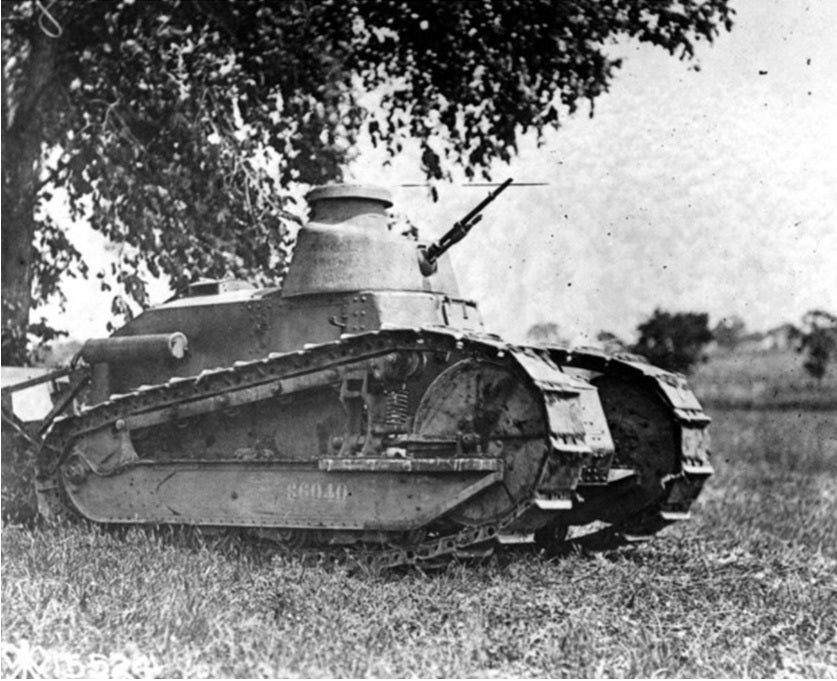
A female Renault FT-17 Light Tank. Male tanks would be equipped with a 37mm cannon. Female tanks were equipped with 8mm Hotchkiss machine-gun. The top speed of a Renault FT was 4.78 mph and was the first tank to use a rotating turret.
Around 2115 hours (9:15 P.M.), an Operations Memorandum No. 11 was issued, restated the 4th Marine Brigade’s assignment and noted that the French 2nd Tank Battalion would precede the 2nd Battalion’s attack as it followed a rolling barrage up the slopes of Blanc Mont. The 2nd Division had control of 144 (75mm) field guns and 84 (120 mm and 155mm) heavy artillery guns, the preparatory barrage was planned to last only a mere 5-minutes prior to the advance of 78th [E] Company. The guns were to then motion into a rolling barrage and provide suppressive fire for the advancing Marines, the rolling barrage was to move at the rate of 100 meters every four minutes. The 2nd Division’s attack would also see the deployment of 48 Renault FT-17 light tanks from the French 2nd and 3rd Tank Battalion, as well as planes from the French 27th and 252nd Aero Squadrons.
Over the night of 2 October 1918 and into the early morning of 3 October 1918, the 4th Marine Brigade began clearing and occupying the Essen Trench, as ordered by Brigadier General Neville earlier in the day. However, the French were unable to clear a section of the Essen Trench, ultimately leaving the Marine’s exposed on their flanks. The German XII Corps now had confirmation that an Allied attack was coming. It placed four divisions in line which were to cover each other in case of collapse. With the German 200th Infantry Division, 51st Reserve Division, 203rd Infantry Division, and the 3rd Guard Division in line respectively. The Marines would fight front-and-center primarily clashing with the 51st Reserve and 203rd Infantry Division’s in the battle to come.
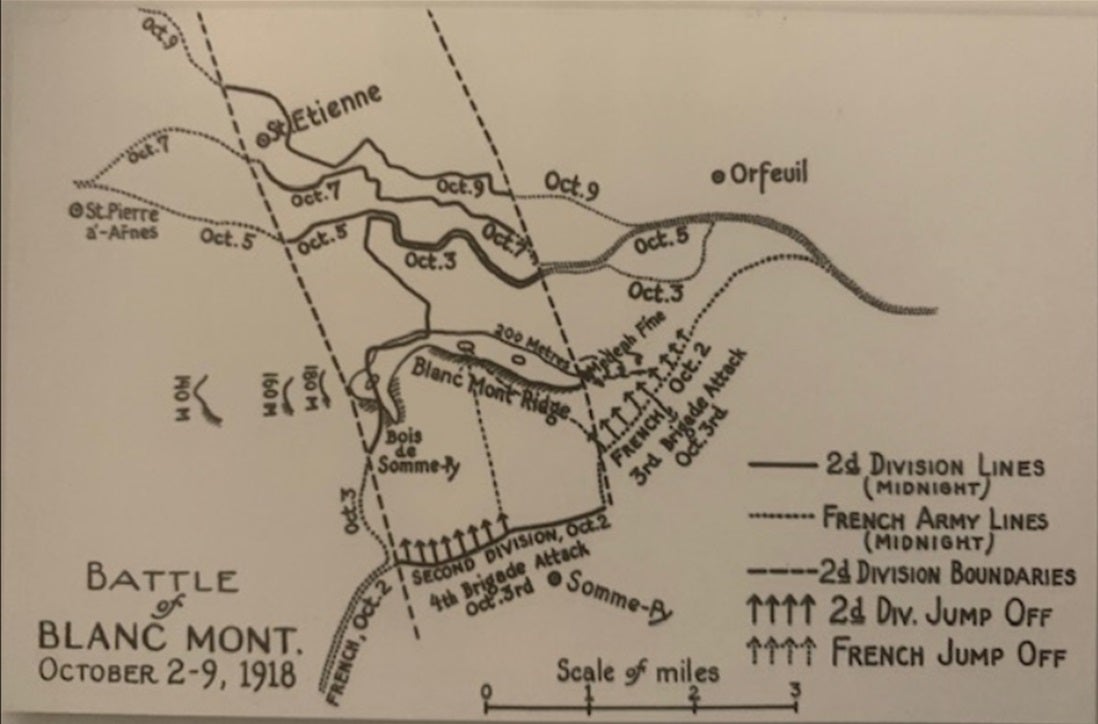
Map courtesy of “US Marine in World War I” by Gilbert, Ed, Catherine Gilbert, and Johnny Shumate. Oxford: Osprey Publishing, 2016. Page 51
-3 October 1918-
At 0530 hours (5:30 A.M.), the ground-shaking booms of the 75mm and 155mm cannons firing began and could be heard from along the line of the 6th Marine Regiment. This artillery was not for them, and they had to continue waiting until 5-minutes before their assault for the German defenses to be hit. At 0550 hours (5:50 A.M.), large chunks of the chalky-white soil began bursting into the air with powerful explosions and deafening booms in a chaotic show of over 200 Allied artillery guns firing relentlessly. As the Marines eagerly waited for the signal to move, a battalion runner dashed through the lines with orders to attack at once! Just past 0555 hours (5:55 A.M.), the 2nd Battalion, 6th Marine Regiment, left its trenches and formed itself into an attack formation with the German 2nd Battalion, 235th Reserve Infantry Regiment 600 meters to their front. The objective of the attack was to break the German Third Army’s grip on the Champagne Sector to allow the French Fourth Army to advance on the Aisne River, the importance of breaking the Germans from their position couldn’t be overstated.
“After we went over the top and got out of the traverses, we were in open country, following the barrage. Before us, all up the hill, were German dugouts with machine gun emplacements manned by eight or ten men each.” – First Lieutenant James McBrayer Sellers, Commanding Officer of the 78th [E] Company, 2nd Battalion, 6th Marine Regiment.
The 2nd Battalion of the 6th Marine Regiment advanced as the first wave of attack against Blanc Mont behind an artillery barrage from the 12th Field Artillery (75mm) tearing up the grown only 55 yards in front of the battalion, close enough to feel the heat from each explosion. Despite the artillery creeping up the slopes of Blanc Mont, it was virtually ineffective against the German machine-gun nests that were constructed all over the hill, which began immediately began firing on the 2nd Battalion so that crossfire covered the entire area of advance. German artillery began to batter the zone of action of the 2nd Battalion as well, creating a frenzy of smoke and deafening noise from the explosions and small arms fire.
 Through low visibility from the smoke of the artillery and thick morning haze, the 2nd Battalion pushed through into the open area riddled with shell-holes and whizzing machine-gun bullets tearing through the air from Blanc Mont directly in front of them. To the right flank of the 2nd Battalion laid the area known as Viper Woods, where the ground between the 4th Marine Brigade and 5th Marine Brigade was left uncovered, to the right laid the fortified positions of Essen Hook. The German positions were more than enough to slow the advance of the 2nd Battalion, however, another issue arose.
The French XI Corps was unable to keep up with the advance of the U.S. Marines, and the 4th Marine Brigade called for the regiments to provide the French with unusually strong flank protection to allow the French to catch up. “The advance was made difficult by the French not advancing on left left. Our flank was thus exposed to flank fire and casualties resulted. Another difficulty was the passing over of [machine-gun] nests, which later opened on us.” – Colonel Feland, commander of the 5th Marine Regiment.
Given that the German Jägers were able to fend off the French 21st Division at Essen Hook, the Marines came under German heavy machine-gun fire on their left flank. To support the Marines, an Allied artillery barrage from the 12th Field Artillery shot high-explosive rounds toward the German positions. In response, the Germans began showering the Marines with phosphorous shells that “burst like giant Fourth of July sparklers in the air showering down what looked like red hot iron…” – Gunnery Sergeant Paradis, 80th [G] Company, 6th Marine Regiment.
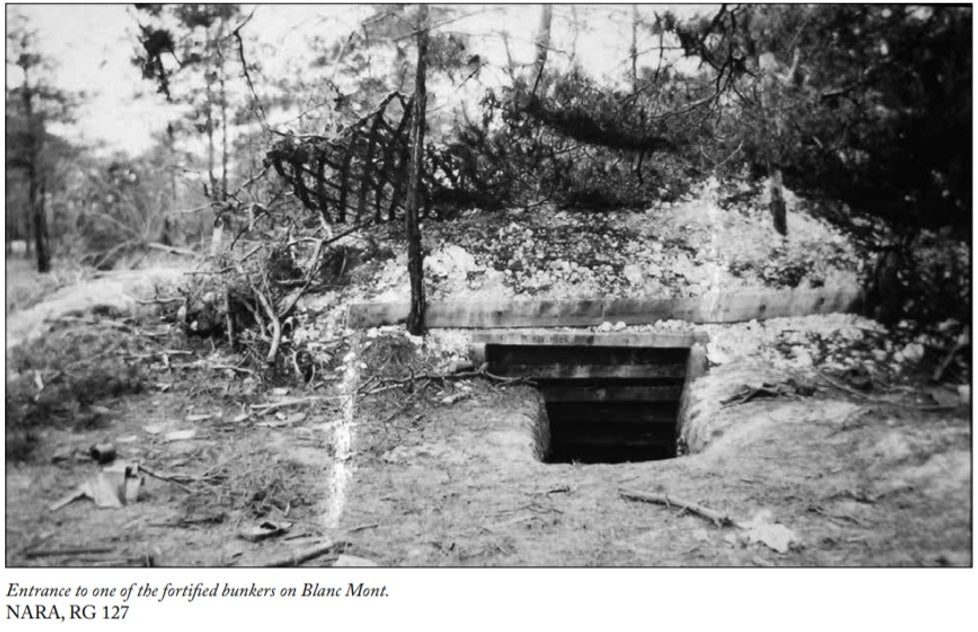
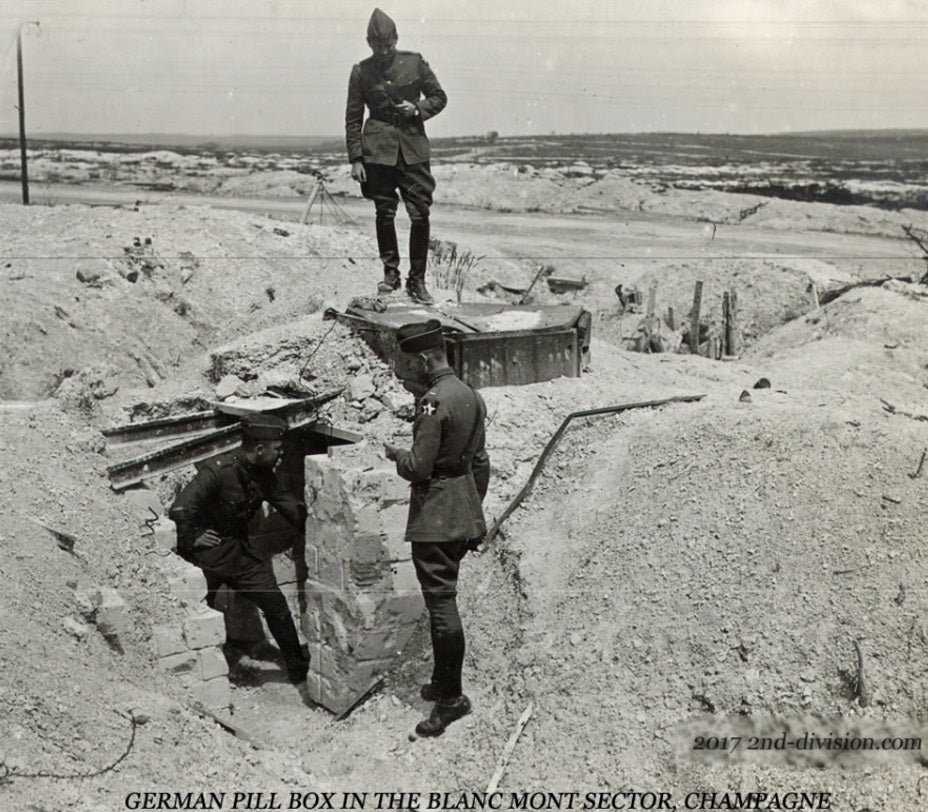
Around 0620 hours (6:20 A.M.), the 2nd Battalion of the 6th Marine Regiment reached the position of the German 2nd Battalion, 235th Reserve Infantry Regiment, which had 8-10 German soldiers positioned inside fortified underground bunkers to protect themselves from artillery. The Germans reported a strength of 464 infantrymen, with 1 machine-gun per squad, but were still unable to protect the disadvantaged Marines from driving into their position. Private Glucksman’s 78th [E] Company of the 6th Marine Regiment were located in a wooded area along the western zone of action boundary of the 2nd Division and were taking heavy fire from two fortified machine-gun positions.
 The 78th [E] Company used a technique known as “marching fire” where during their assault, the Marines walked in upright positions and fired their Springfield M1903‘s from their hips. Simultaneously, automatic riflemen sprayed German positions while their loaders walked beside them to support the heavy Chauchat machine-guns. As the Marines advanced, Private Samuel Glucksman charged ahead and captured a German prisoner, forcing his captive to lead him to a dugout containing 20 more Germans, of which Private Glucksman also took prisoner. Although he was wounded, being shot in the left portion of his chest, he brought his prisoners back to the Allied lines and received first-aid treatment. He then immediately returned to the frontline and continued assaulting German positions until his wound left him unable to move forward, forcing him to be evacuated.
Around 0800 hours (8:00 A.M.), the sun remained covered by clouds looming overhead. The dry summer air was gusting and visibility remained poor as a hazy mist had combined with the smoke from artillery shells and toxic gas. When around 0830 hours (8:30 A.M.), the 2nd Division had seized control of Blanc Mont Ridge, pistol flares were used to provide signals to signal the capture of objectives but could barely be seen by the 2nd Division’s headquarters. Orders were given to mop-up the area of any remaining German elements and although Blanc Mont Ridge had been taken, the Marines still had a long and bloody fight ahead of them. The summit of Blanc Mont and the fortified bunkers and network of trenches that provided the Germans with every advantage possible had yet to be captured.
Private Glucksman received the Distinguished Service Cross for his heroism at Blanc Mont on 3 October 1918 under General Orders Number 32 (1919)
Private Glucksman was inducted into service in July of 1917 and assigned to 78th Company, 6th Marine Corps, 2nd Division at Marine Corps Base Quantico, also training at the Marine Corps Rifle Range in Winthrop, Maryland. Private Glucksman and 2nd Battalion left for Brest, France in the fall of 1917. In March of 1918, the 6th Marines were brought to the front just south of Verdun, France. They would see action in Chateau-Thierry, Belleau Wood, St. Mihiel Salient, Meuse Argonne, and Blanc Mont Ridge, the latter, where Private Glucksman received the Distinguished Service Cross, Navy Cross, Croix de Guerre with Gilt Star, and Silver Star Medal;
“The President of the United States of America, authorized by Act of Congress, July 9, 1918, takes pleasure in presenting the Distinguished Service Cross to Private Samuel Glucksman (MCSN: 85903), United States Marine Corps, for extraordinary heroism while serving with the Seventy-Eighth Company, Sixth Regiment (Marines), 2d Division, A.E.F., in action at Blanc Mont, France, 3 October 1918. After capturing a prisoner, Private Glucksman forced his captive to lead him to a dug-out containing twenty of the enemy, whom he also captured. Later, after being wounded, he returned to the front line, after securing first-aid treatment, and continued in action until his wound forced him to be evacuated.”
“The President of the United States of America takes pleasure in presenting the Navy Cross to Private Samuel Glucksman (MCSN: 85903), United States Marine Corps, for extraordinary heroism while serving with the 78th Company, 6th Regiment (Marines), 2d Division, A.E.F. in action at Blanc Mont, France, 3 October 1918. After capturing a prisoner, Private Glucksman forced his captive to lead him to a dug-out containing twenty of the enemy, whom he also captured. Later, after being wounded, he returned to the front line, after securing first-aid treatment, and continued in action until his wound forced him to be evacuated.”
“By direction of the President, under the provisions of the act of Congress approved July 9, 1918 (Bul. No. 43, W.D., 1918), Private Samuel Glucksman (MCSN: 85903), United States Marine Corps, is cited by the Commanding General, SECOND Division, American Expeditionary Forces, for gallantry in action and a silver star may be placed upon the ribbon of the Victory Medals awarded him. Private Glucksman distinguished himself while serving with the 78th Company, Sixth Regiment (Marines), 2d Division, American Expeditionary Forces at Blanc Mont, France, 1 – 10 October 1918.”
Private Glucksman later received the Purple Heart for the injuries he obtained on 3 October. Private Glucksman returned to the U.S. in early 1919 and briefly stationed with 95th Company, 6th Marines before he was Honorably Discharged on 20 May 1919, and made a Sergeant on sight. He later stated, “Although I did not believe this country should enter the War, when we did get into it I believed it my duty to enlist and I shipped over right away…I did not do anything more than my duty and I am afraid everybody is too good to me. I have been treated very fine by everybody and if another war was declared tomorrow I would certainly enlist if they would have me.”
Glucksman moved to Washington, D.C. post-Discharge, and worked as a miner; by 1930, he had moved to Deep Creek, Virginia, and worked as a laborer at the Norfolk, VA Naval Shipyard. It was around this time that Glucksman most likely met Bessie Allean Kemp Roman (1895-1969), a “Yeomanette” in World War I, who lived only 8 miles from him in Portsmouth with her husband, brother, and sister. Bessie was granted a divorce from her husband, James L. Roman (1894-?), due to desertion in August of 1935. Glucksman and Bessie were married on 6 June 1936 by a Presbyterian Minister, settling at Glucksman’s home at 9 Gillis Road, Portsmouth.
In the early 1940s, the couple moved to St. Petersburg, Pinellas, Florida, becoming active in a number of social and military organizations, including the American Legion and Legion of Valor. Glucksman died at St. Petersburg General Hospital on 14 June 1947 of an unknown cause; he is buried in Arlington National Cemetery, Arlington, Virginia.
Addition: The only indication of why Glucksman left Austria is that it was the result of moral disagreements with his family; “His mother and father live in Lemburg, Austria, although he has not heard from them for many years and he is confident his cousins served in the Austrian army opposing him.” On another note, Glucksman appears not to have been an ardently religious individual; he participates in correspondence with the American Jewish Committee-Jewish Welfare Board for several years, but is married by a Presbyterian Preacher and buried with a Latin cross on his headstone. Because Glucksman self-states as Jewish on his Jewish Welfare Board Questionnaire, he qualifies for review under the VMR; whether or not he is a regular participant in traditional services or practices, he does make it clear he considered himself Jewish at least once in his life.