Elmore Thomas McCowin
Elmore Thomas McCowin’s Personal Narrative was derived from information found in public records, military personnel files, and local/state historical association materials. Please note that the Robb Centre never fully closes the book on our servicemembers; as new information becomes available, narratives will be updated to appropriately represent the life story of each veteran.
Please contact the Robb Centre for further clarification or questions regarding content or materials.
Military Honor(s):
Distinguished Service Cross
Citation: The President of the United States of America, authorized by Act of Congress, July 9, 1918, takes pleasure in presenting the Distinguished Service Cross to Private Elmer McCowin (ASN: 104360), United States Army, for extraordinary heroism in action while serving with Company K, 369th Infantry Regiment, 93d Division, A.E.F., at Ripont Swamp, France, 26 September 1918. While passing through a swamp where most of the platoon was wounded, Private McCowin dressed the wounds of several of his comrades, and after reaching the shelter of a hill beyond returned repeatedly and assisted many of his comrades to a place of safety. He also carried messages through shell and machine-gun fire after being severely gassed.
Life & Service
- Birth: 26 March 1897, Richmond, VA, United States
- Place of Residence: Byrd, VA, United States
- Race/Ethnicity: African American
- Death: 12 July 1927 Leavenworth, KS, United States
- Branch: Army
- Military Rank: Private
- Company: [K]
- Infantry Regiment: 369th
- Division: 93rd
Personal Narrative
Elmore Thomas McCowin was born to Charles (1858-?) and Carolina Zora Jenkins (1862-around 1900), Charles’ second wife, on 26 March 1897 in Richmond, Virginia. The youngest of four children; sisters Clara (1886-1960), Carrie (1890-?), Ada Marie (1894-1988), and Elmore were raised in Byrd, Goochland County, Virginia under the care of their widowed father, who operated a dry goods store. Elmore’s life between 1900-1917 is unknown as are details surrounding his sisters.
McCowin enlisted in the New York National Guard on 11 June 1917 and was mustered into federal service on 12 March 1918; he was assigned to Co. K, 369th Infantry Regiment, 93rd Division, AEF. Private McCowin was mobilized overseas in December of 1917; he received the Distinguished Service Cross for his actions on 26 September 1918 at Ripont Swamp, France;
“The President of the United States of America, authorized by Act of Congress, July 9, 1918, takes pleasure in presenting the Distinguished Service Cross to Private Elmer McCowin (ASN: 104360), United States Army, for extraordinary heroism in action while serving with Company K, 369th Infantry Regiment, 93d Division, A.E.F., at Ripont Swamp, France, 26 September 1918. While passing through a swamp where most of the platoon was wounded, Private McCowin dressed the wounds of several of his comrades, and after reaching the shelter of a hill beyond returned repeatedly and assisted many of his comrades to a place of safety. He also carried messages through shell and machine-gun fire after being severely gassed.”
Awarded DSC by CG, AEF, December 3, 1918. Published in G.O. No. 37, W.D., 1919.
McCowin was transferred to a Machine Gun Company as Private First Class on 6 November 1918, and returned to the United States on 9 February 1919. Private FC McCowin was Honorably Discharged on 22 February 1919.
McCowin re-enlisted on 10 June 1919, and was assigned to Group B, Motor Transport Company, with whom he participated in M.T.C. Training School at Camp Holabird, Maryland. McCowin remained at Camp Holabird, transferring to M.T.C. General Depot, Co. 596, and back to Group B by December of 1919. Private FC McCowin was Honorably Discharged on 9 June 1920, re-enlisted 11 June 1920, assigned to Co. F, 17th Infantry Regiment, soon transferred to Supply Co., 17th Infantry on 25 November. McCowin transferred to Service Co., 17th Infantry on 24 June 1922, with whom he was Honorably Discharged from in June of 1923 at Ft. Crook, Nebraska. McCowin re-enlisted on 11 June 1923, remaining with Service Co., 17th Infantry until 16 June 1926. McCowin was assigned at various points in time to Fort Bliss, El Paso, Texas; Ft. Riley, Flint Hills, Kansas; and Fort Leavenworth, Leavenworth, Kansas.
McCowin met double divorcee Esther Louise Sheffield (1902-1980), who had just separated from her second husband, Robert G. Wade (1898-1980), and first husband, Jack Axel Sorensen (1895-1980) only a few years prior. McCowin and Sheffield married and lived in Omaha with Sheffield and Sorensen’s daughter, Christine Lucille (1918-1992).
While at Fort Crook, McCowin was involved in an automobile accident on 23 February 1927- he and a separate vehicle without headlights collided, causing McCowin to be rushed to the base hospital for potential spinal injuries. After receiving initial treatment at Ft. Crook, McCowin was transferred to Ft. Leavenworth on 5 March, suffering from increasing paralysis of the spinal column with an unknown diagnosis. Between March and July, it was found that McCowin was not suffering from complications of the accident, but instead an advanced form of syphilis that rapidly began to degenerate his spinal column and nervous system. McCowin died on 12 July 1927, only 9 days after his final diagnosis.
Sheffield married her first husband Jack Sorensen again in the late 1920s, but divorced him for a second time in the mid-1930s. While living with her daughter and son-in-law in the 1940s, Sheffield married a lodger, Walter Henry Quick (1895-1980), and lived in Los Angeles until both of their deaths in 1980.
McCowin is buried at Fort Leavenworth National Cemetery, Fort Leavenworth, Kansas.
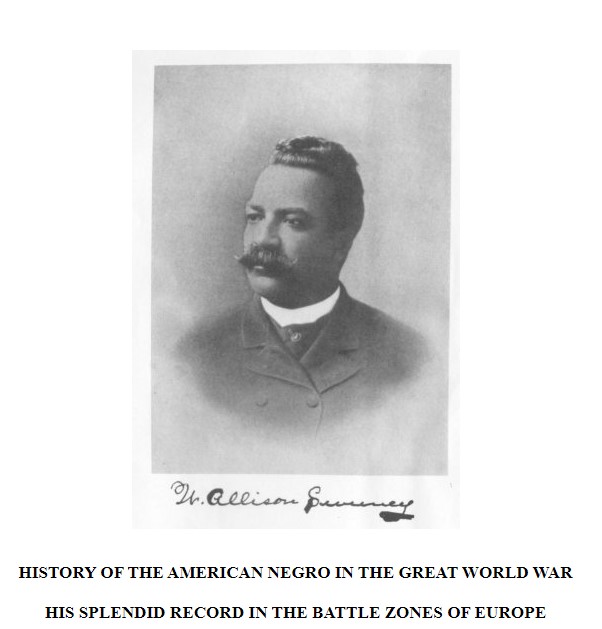
Excerpt from W. Allison Sweeney's History of the American Negro in the Great World War
“Here is the valiant and humorous story of Elmer McCowin, 669 Lenox Avenue, New York City, a private in Co. K, 369th Infantry, and how he won the Distinguished Service Cross. He said:
On September 26th, the captain asked me to carry dispatches. The Germans pumped machine gun bullets at me all the way, but I made the trip and got back safely. Then I was sent out again. As I started the captain hollered to bring him back a can of coffee. He was joking but I didn’t know it. Being a foot messenger I had some time ducking those German bullets. Those bullets seemed very sociable but I didn’t care to meet up with any of them, so I kept on traveling on high gear. None touched my skin, though some skinned pretty close.
On the way back it seemed the whole war was turned on me. One bullet passed through my trousers and it made me hop, skip, and jump. I saw a shell hole six feet deep. Take it from me I dented it another six feet when I plunged into it. In my fist I held the captain’s can of coffee. When I climbed out of the hole and started running again a bullet clipped a hole in the can and the coffee started to run out. But I turned around stopped a second, looked the Kaiser in the face and held up the can of coffee with my finger plugging up the hole to show the Germans they were fooled. Just then another bullet hit the can and another finger had to act as a stopper. I pulled out an old rabbit’s foot that my girl had given me and rubbed it so hard the hair almost came off.
It must have been the good luck thing that saved my life because the bullets were picking at my clothes and so many hit the can that at the end all my fingers were in use to keep the coffee in. I jumped into shell holes and wriggled along the ground and got back safely. And what do you think? When I got back into our own trenches I stumbled and spilled the coffee.
Not only did Lieutenant George Miller, battalion adjutant, confirm the story, but he added,
When that boy came back with the coffee his clothes were riddled with bullets. Yet half an hour later he went out into no man’s land and brought back a number of wounded until he was badly gassed. Even then he refused to go to the rear and went out again for a wounded soldier. All this under fire. That’s the reason he got the DSC.”